Jumping Spider Enclosure — Ventilated Acrylic Habitat by ArachNest
A crystal-clear, magnetic-lid acrylic enclosure sized specifically for jumping spiders (Salticidae) — not a repurposed reptile tub. Three sizes, laser-cut ventilation, and a lid you can open one-handed at feeding time.
🚨 Only a few left in stock
Most acrylic enclosures on the market are sized for tarantulas, not jumping spiders
If you've shopped for a jumping spider habitat before, you've probably run into the same problem we did: most "spider enclosures" sold online are actually built for tarantulas, scorpions, or general reptile keeping, then relabeled. They arrive oversized, with ventilation patterns designed for a much bigger, much less agile animal, or with lids that require two hands and a flat surface — awkward when you're trying to drop in a cricket without giving your spider an escape route.
Jumping spiders (family Salticidae) are visual hunters. They rely on depth perception and short, precise jumps rather than web-trapping, which means their housing needs are genuinely different from a tarantula's burrow-and-wait setup. A cube that's too large can leave a small jumper struggling to locate food or feeling constantly on edge; one that's too shallow limits the vertical anchor points many arboreal species use for silk "safety lines" during molts.
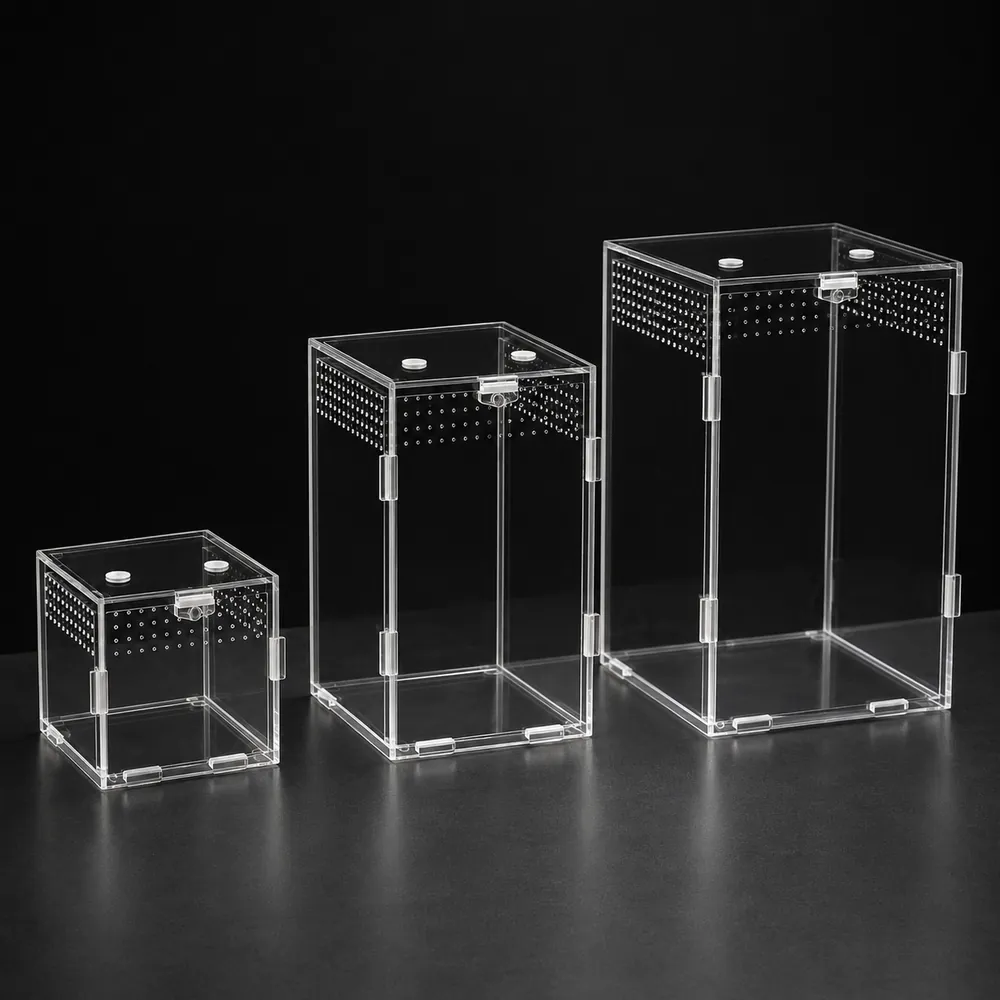
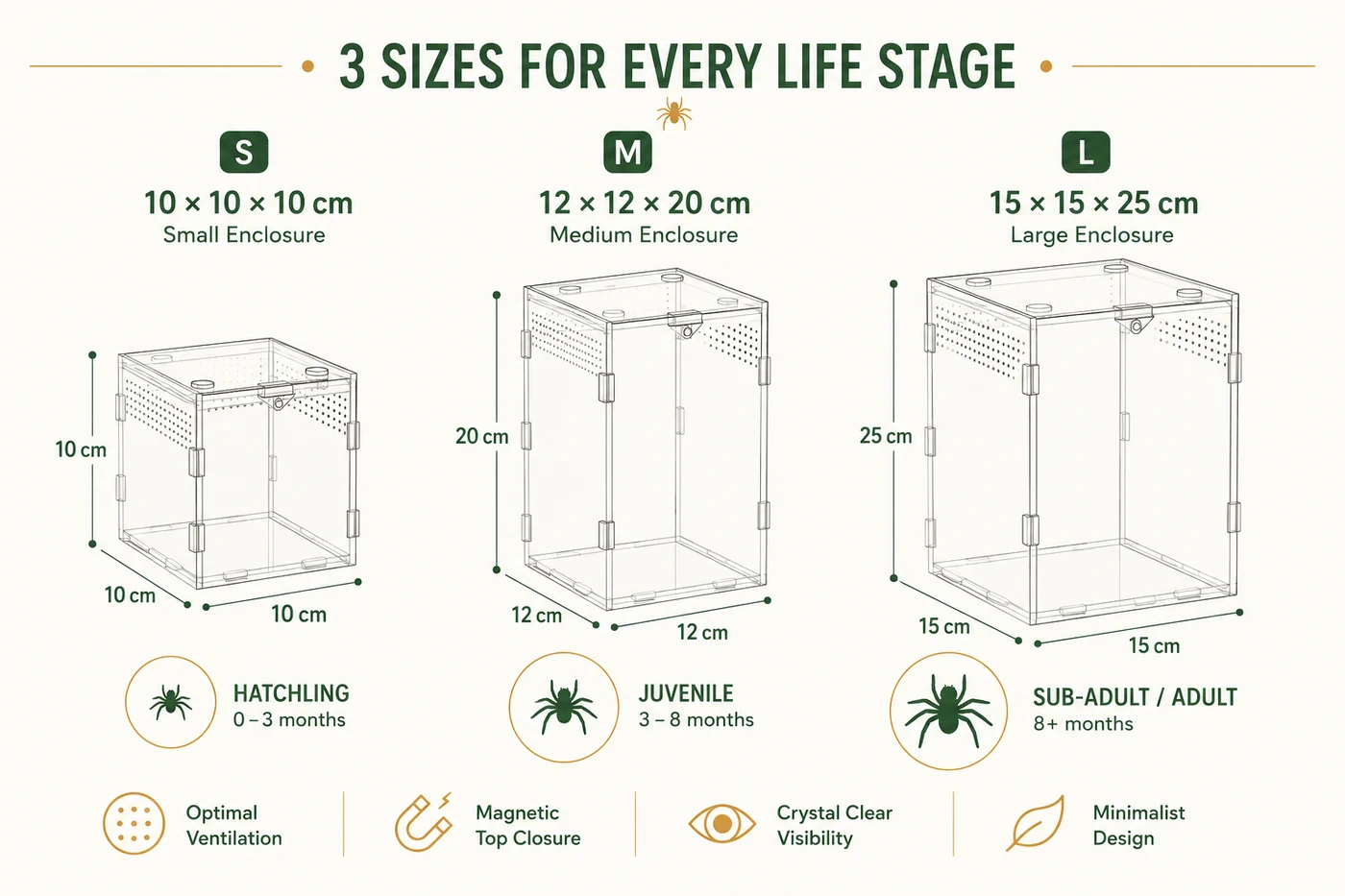
That's the gap ArachNest's enclosure line is built to close. The acrylic construction itself is well reviewed for build quality and clarity. Our job was narrowing the size range down to the 3 that actually make sense for a jumping spider: a compact 10x10x10cm cube for a single adult, a taller 12x12x20cm option for arboreal species that want vertical space, and a Large that comes two ways — a tall 15x15x25cm for maximum vertical climbing room, or a wider, lower 25x15x15cm for more floor space and décor. Every size keeps the same magnetic lid and ventilation pattern — only the footprint and height change.
Our verified buyers back this up: multiple reviewers explicitly called out using these enclosures for jumping spiders, not just tarantulas — which is part of why we built ArachNest around this specific use case instead of listing it as a generic "critter keeper."
There's also a practical reason size-matching matters beyond comfort: feeding success. Jumping spiders hunt by sight, striking prey they can see and track across a relatively short distance. Drop a cricket into an enclosure that's too large relative to the spider, and it can take the spider considerably longer to notice it — or the prey item can hide in a corner the spider never patrols. Keepers who size down to something closer to ArachNest's Small or Medium cubes for a single Salticidae specimen often report faster, more reliable feeding responses than in oversized general-purpose tubs, which lines up with what visual hunting predators like jumping spiders need from their environment.
Built around the details keepers actually complain about
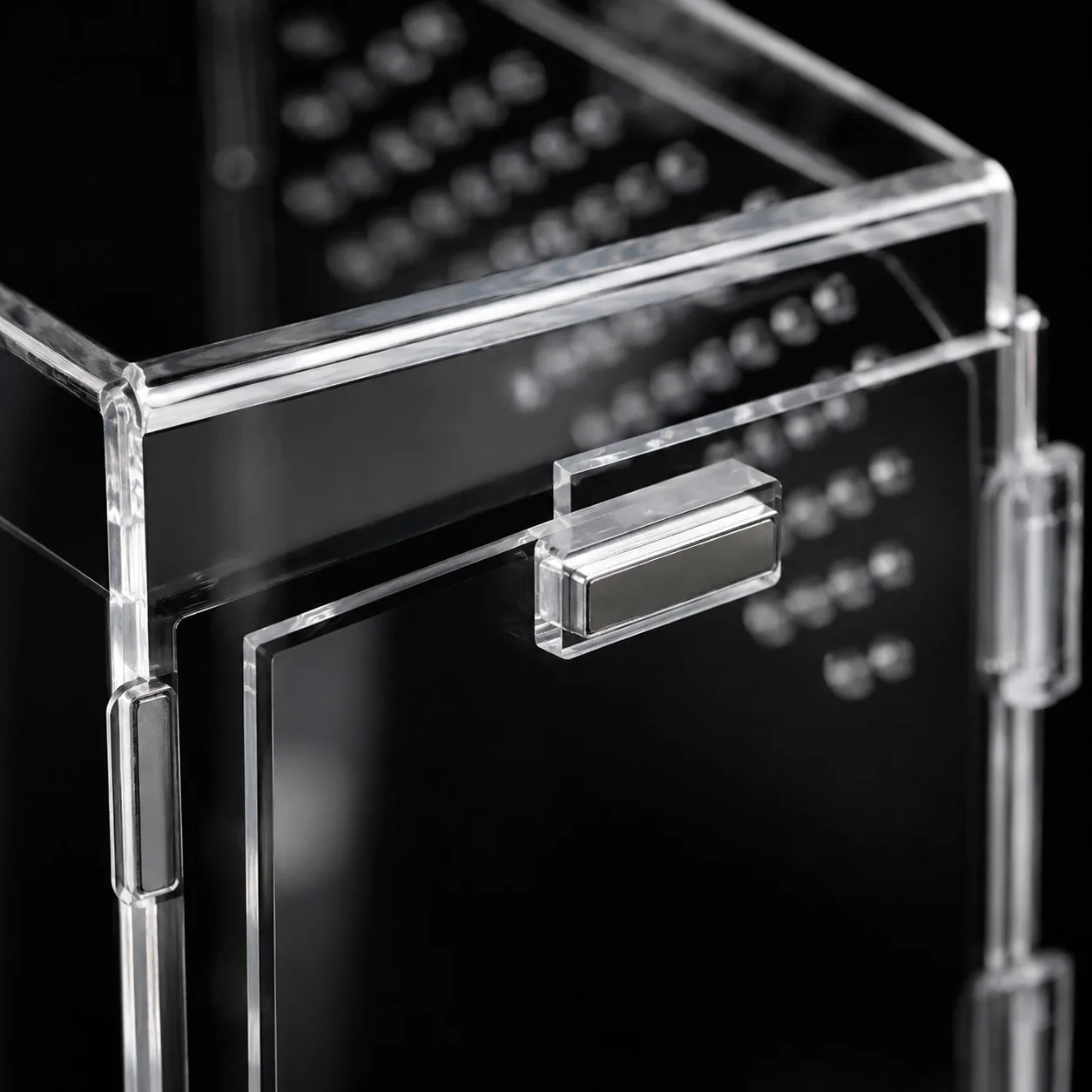
Magnetic lid, one-handed access
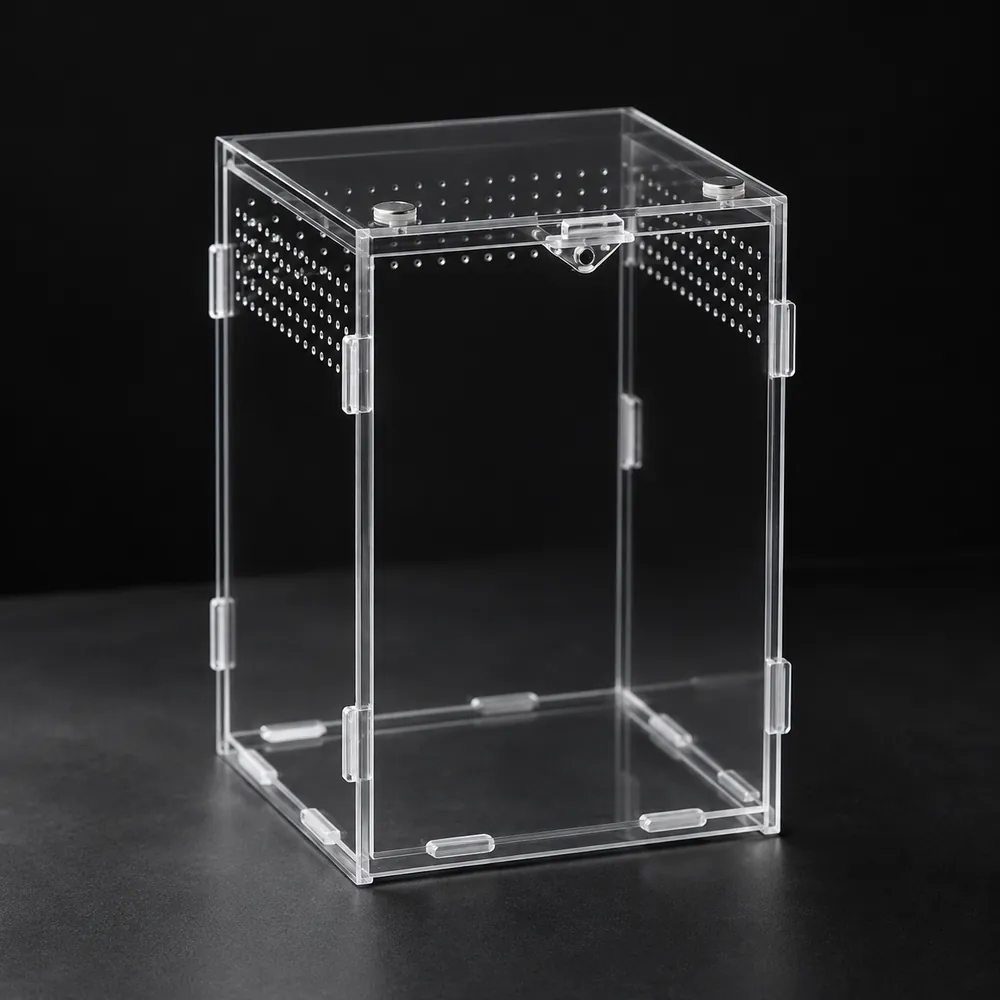
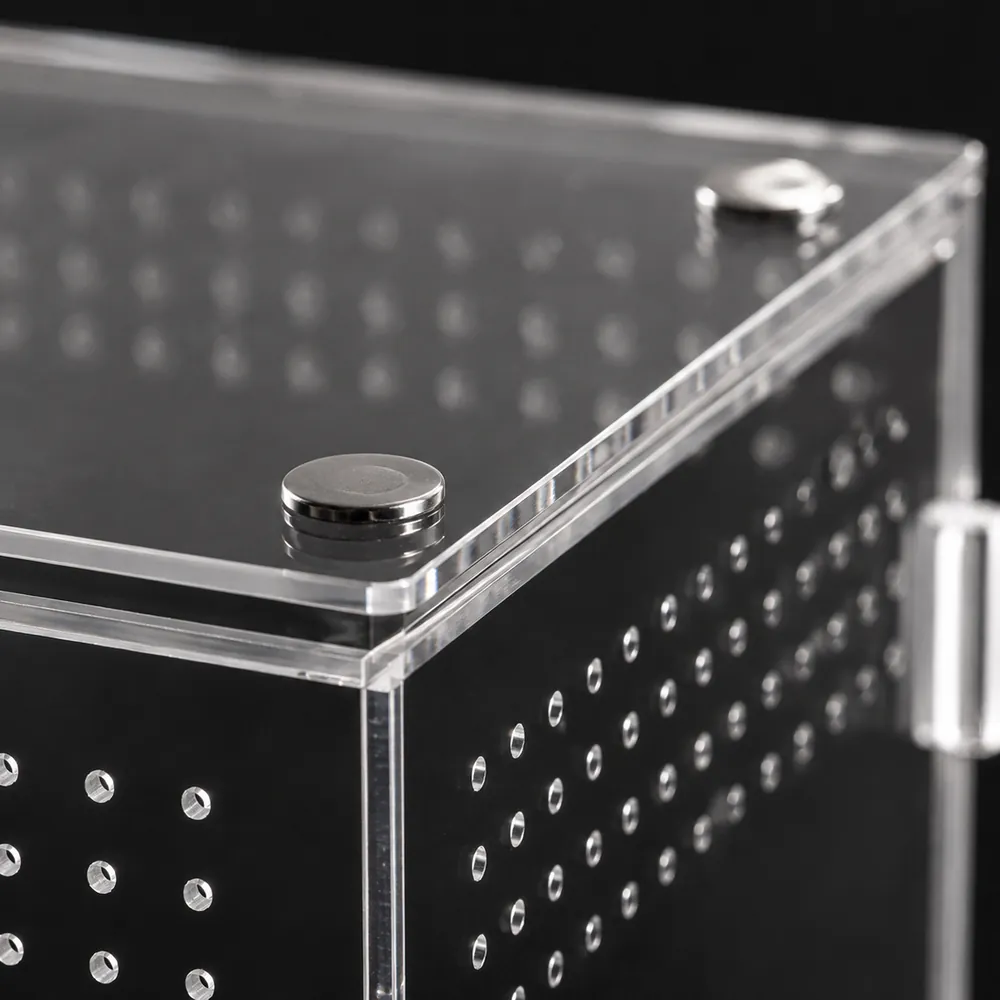
The lid seats flush and holds with a magnetic strip, so you can lift it with one hand during feeding or misting without wrestling a screw-top or slide panel.
This matters more than it sounds — jumping spiders are fast, and every extra second the enclosure sits open while you fumble with a lid is a chance for an escape or a startled spider retreating from a feeding attempt. Verified reviewers specifically praised the magnetic closure as "very good" and easy to use.
Crystal-clear cast acrylic
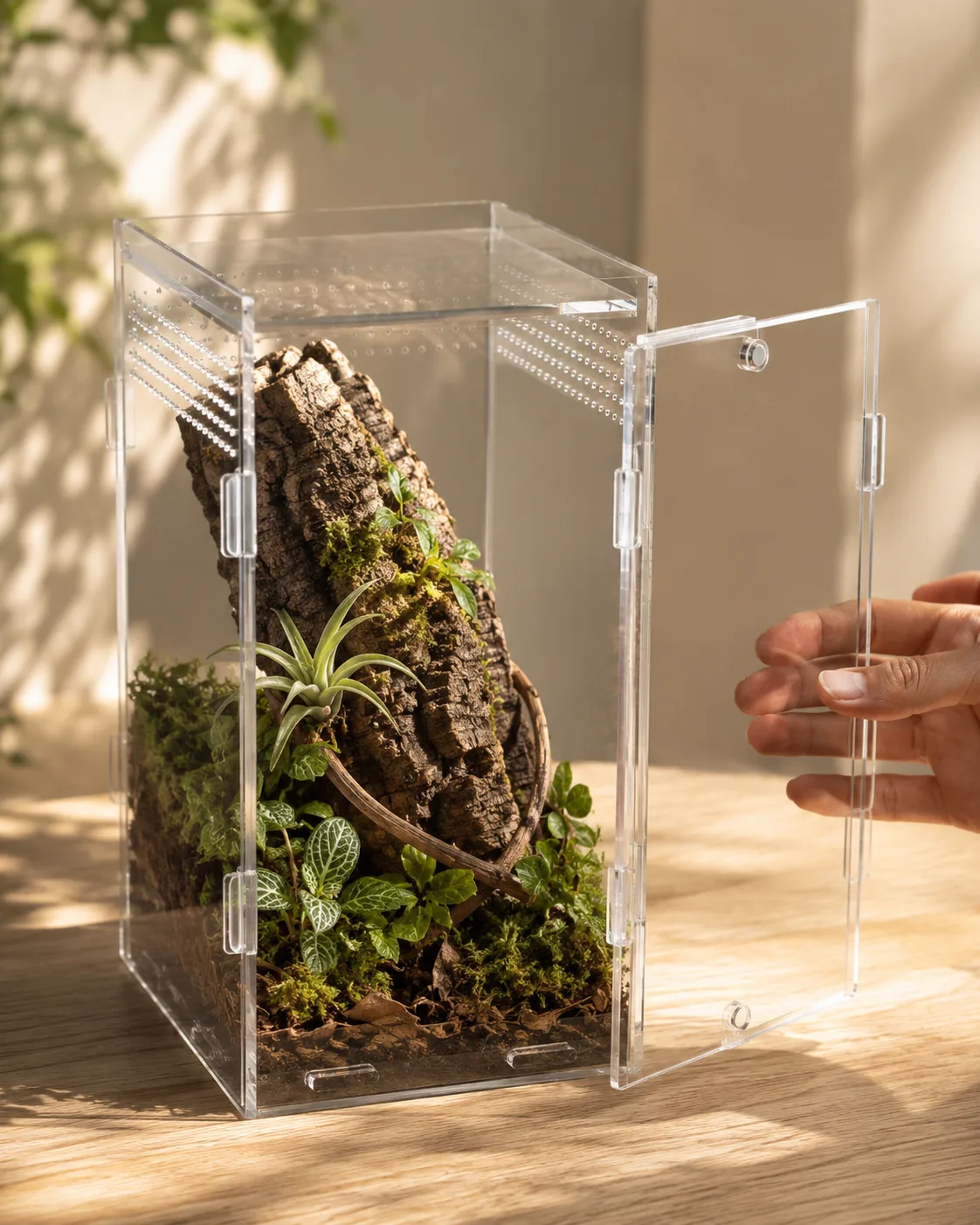
Panels are cast acrylic, not thin polystyrene — once the factory protective film is peeled off, the walls are optically clear for viewing and photography.
One verified reviewer described it as "crystal clear once the protective film is removed," which matters for a hobby where a lot of the enjoyment is simply watching the animal. Cloudy or scratched-looking plastic undercuts that experience fast.
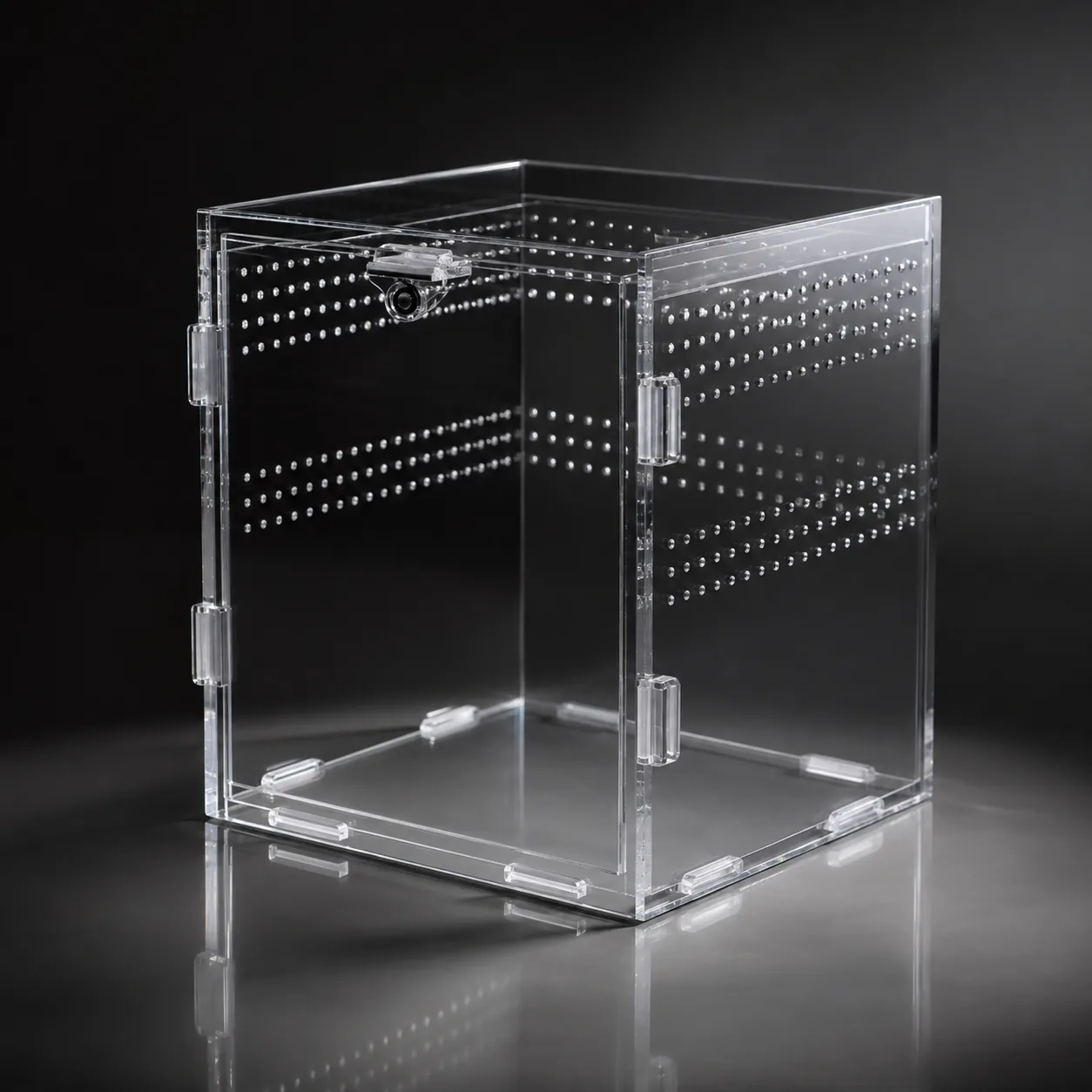
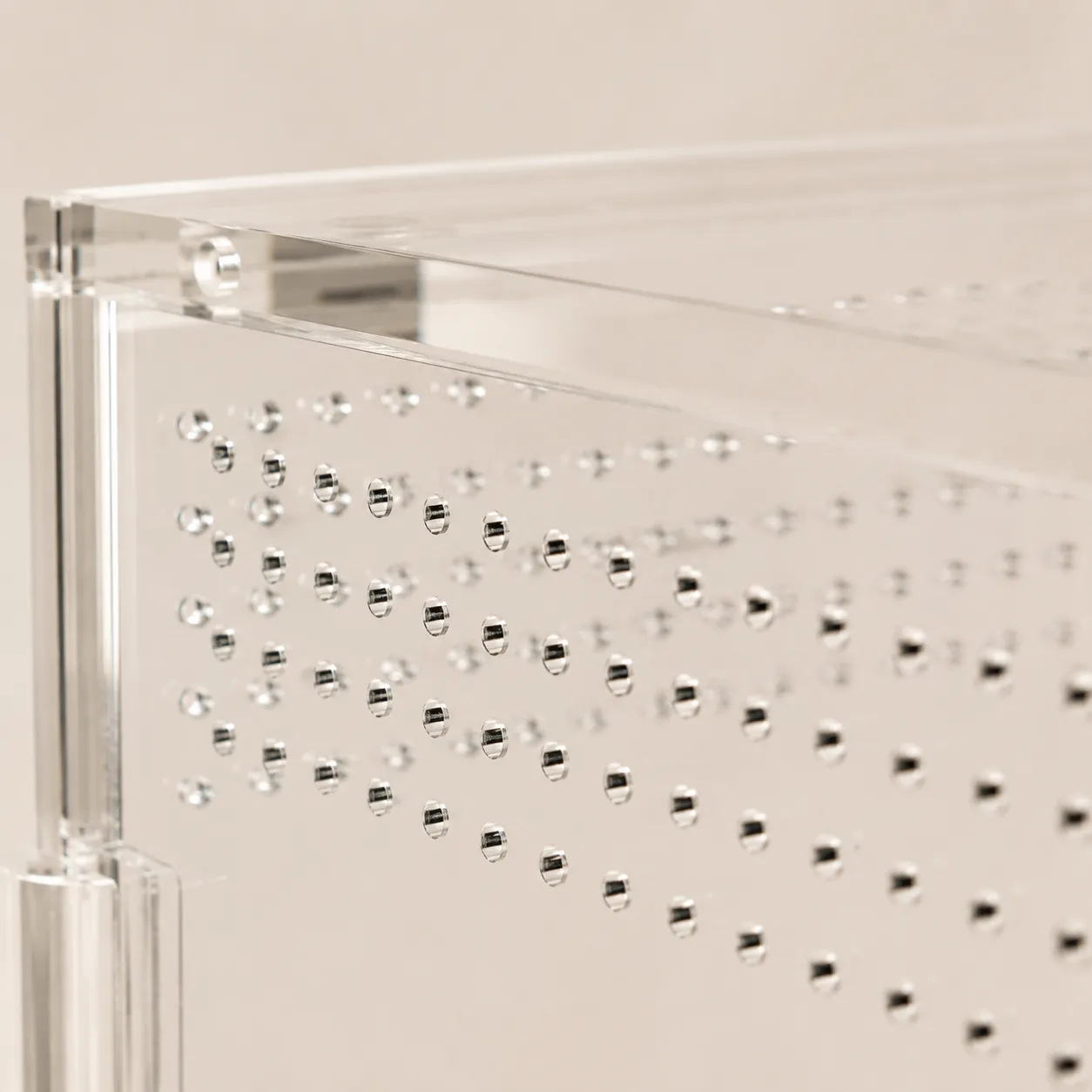
Laser-cut ventilation
Ventilation holes are cut into at least two panels to keep air moving and prevent the stagnant, overly damp conditions that can encourage mold on substrate.
Good airflow paired with a light misting routine (common hobbyist practice, not a guaranteed formula) is how most keepers avoid condensation fogging the walls or substrate going sour.
Easy assembly, no tools
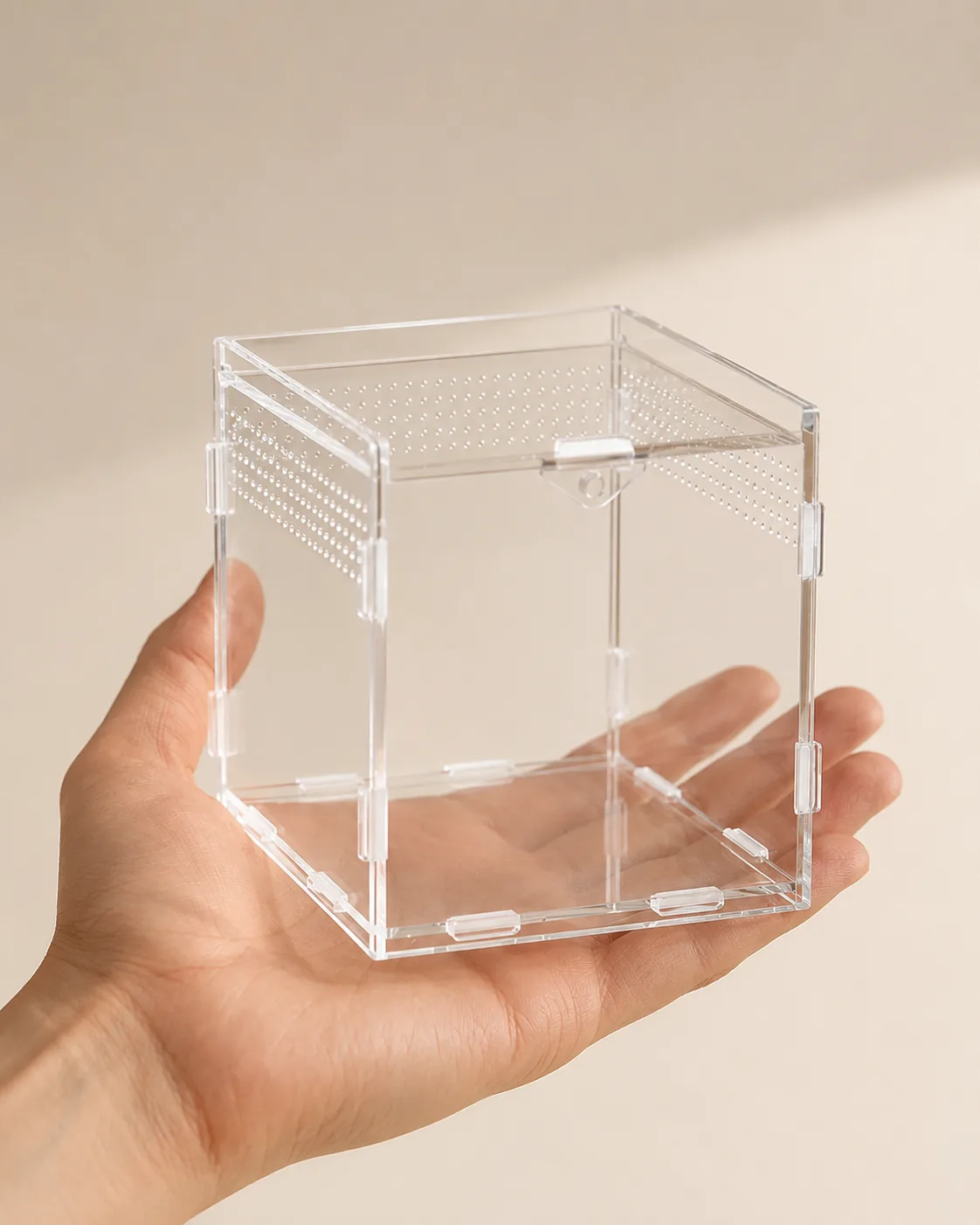
Panels click together without glue or tools — most buyers report assembling their enclosure in a few minutes straight out of the box.
A verified reviewer noted it "was easy to assemble," and a separate reviewer in Germany called it "easy to install without instructions." Every order is backed by our 30-day money-back guarantee.
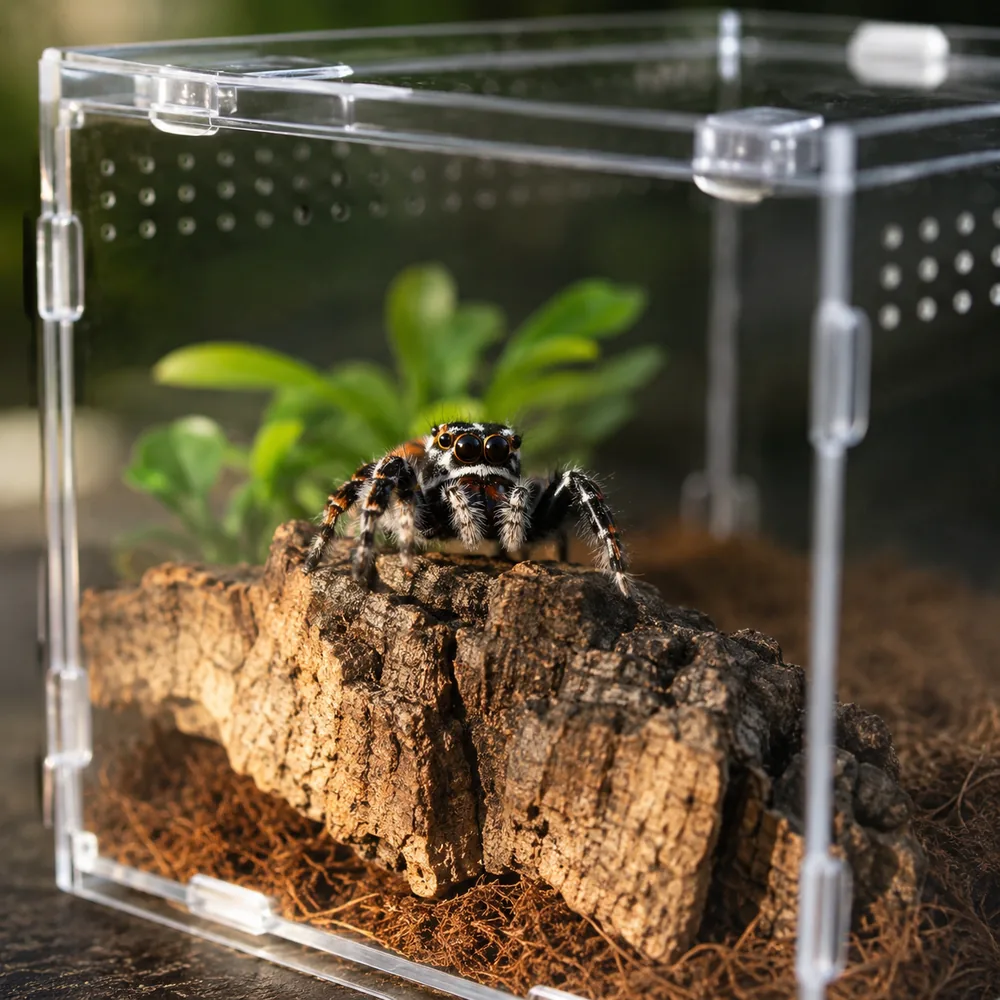
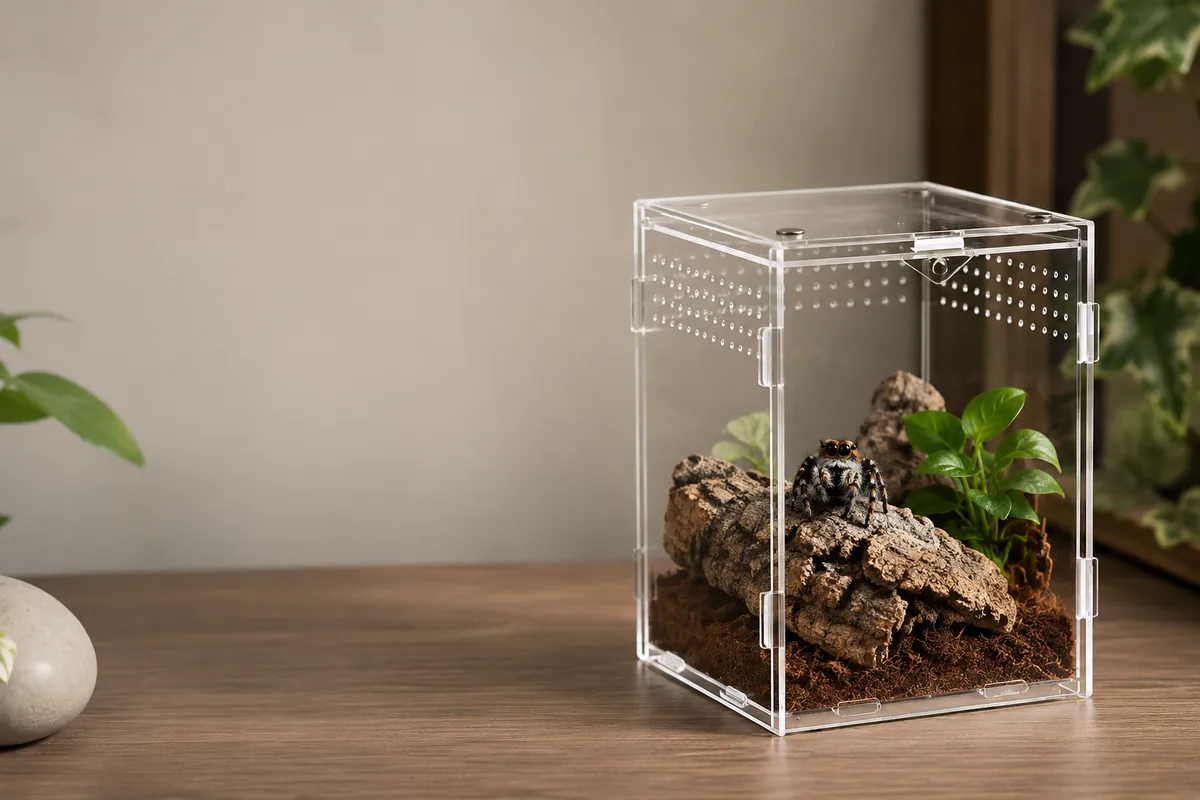
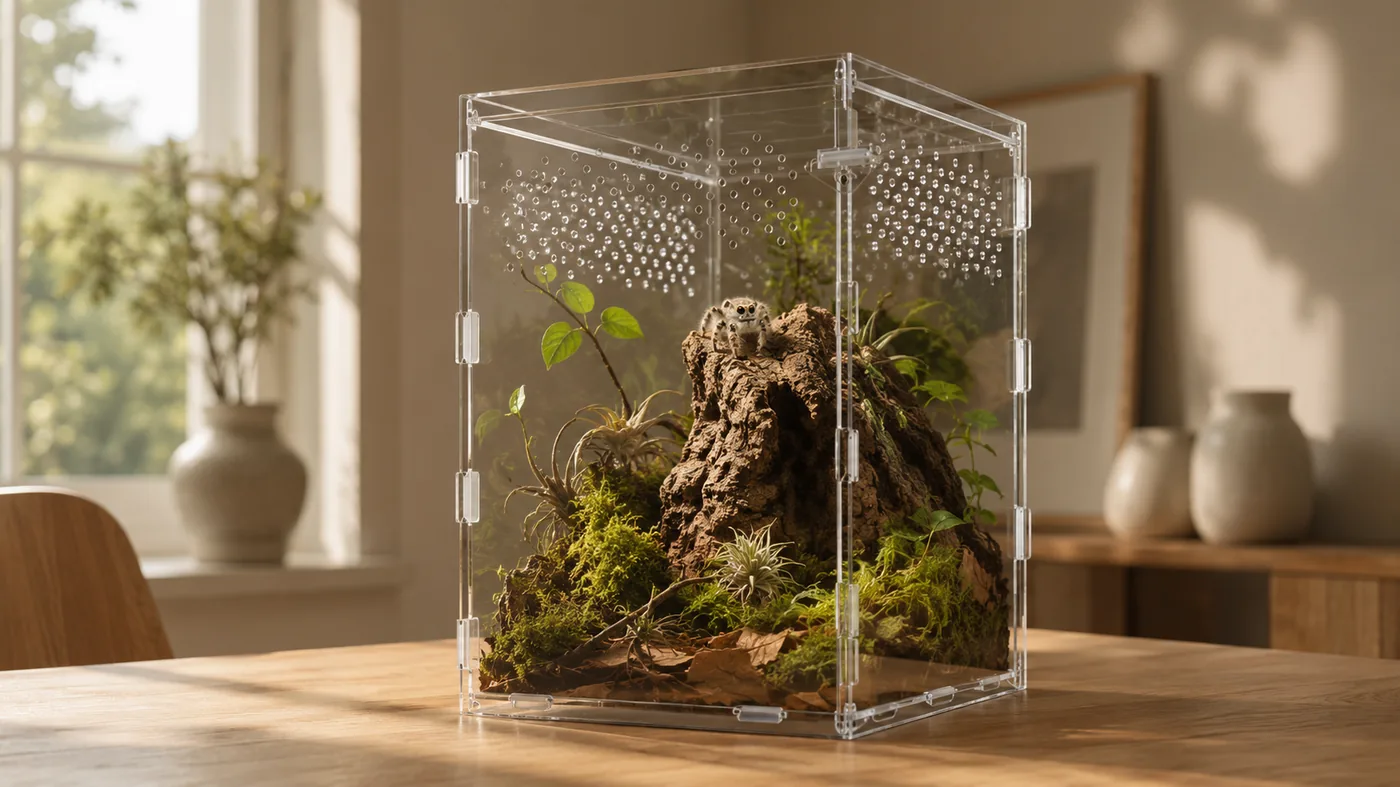
Jumping spiders settling into their planted setups
Enclosure dimensions vs. common jumping spider species
Nobody selling generic acrylic enclosures publishes this comparison, so we built it ourselves: how ArachNest's 3 sizes line up against adult body length for the jumping spider species most commonly kept in the US hobby. Body-length ranges below are the typically cited figures used across keeper communities and species guides, not a lab measurement we ran ourselves — treat them as a sizing reference, not a taxonomic source.
| Enclosure size | Interior footprint | Commonly kept species / typical adult size |
|---|---|---|
| Small (10x10x10cm) | 100 cm² floor, 10cm height | Phidippus regius juveniles, Phidippus audax (~10-13mm) — single adult, ground-active species |
| Medium (12x12x20cm) | 144 cm² floor, 20cm height | Phidippus regius adults (~15-18mm), arboreal species that use vertical anchor lines |
| Large Tall (15x15x25cm) | 225 cm² floor, 25cm height | Arboreal species wanting maximum vertical climbing and web-anchor room — the tallest of the four |
| Large Wide (25x15x15cm) | 375 cm² floor, 15cm height | Larger Phidippus species or keepers adding multiple décor/anchor points and feeding zones — most floor room, lower profile |
Panel thickness on this acrylic line runs in the rigid range typical of cast-acrylic invertebrate enclosures at this price point — solid enough to resist flexing under normal handling, per our verified buyer feedback. We do not have an independent caliper measurement to publish, so we're not citing a specific millimeter figure here.
What the data says about jumping spiders and their housing
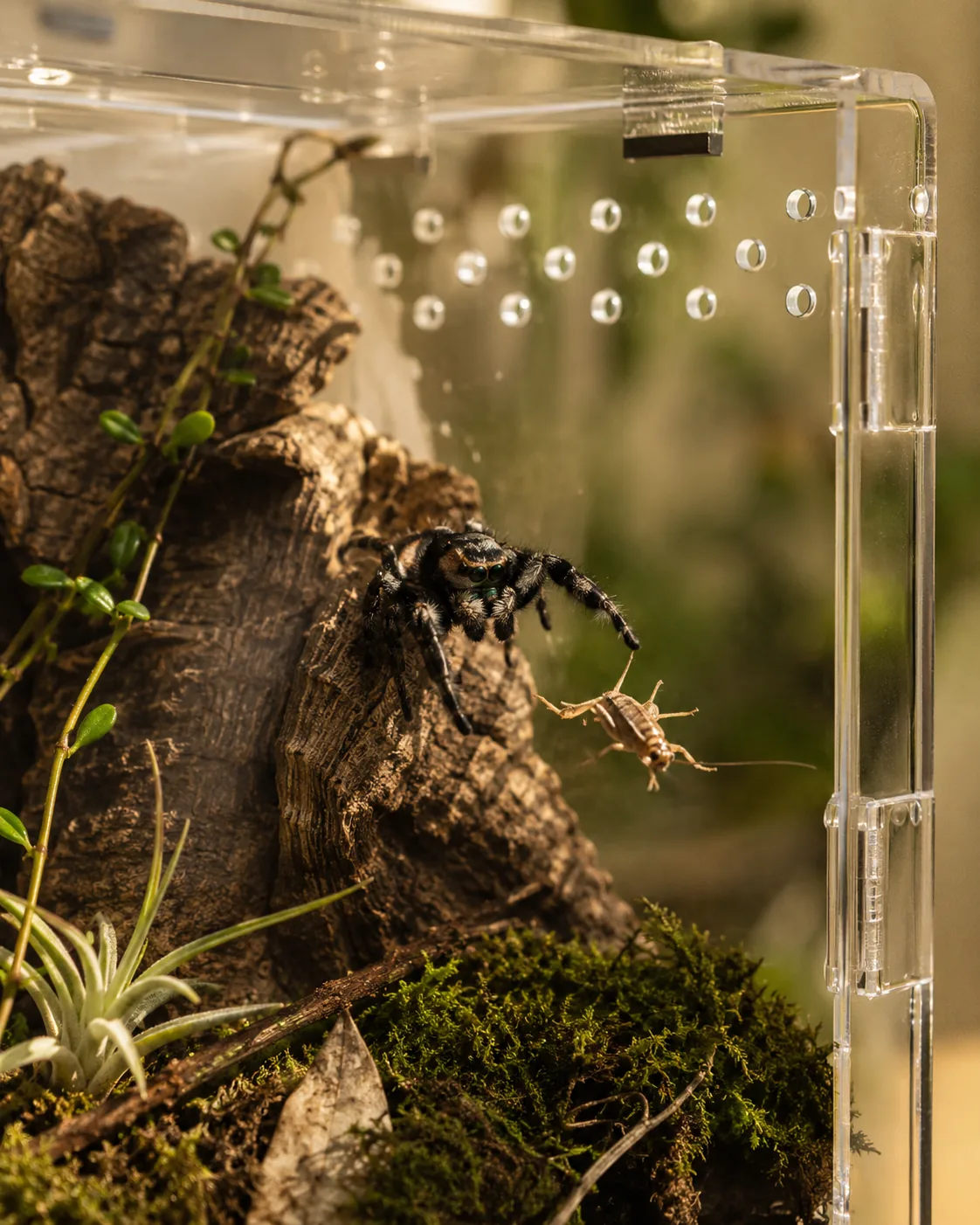
body length in millimeters for an average adult Phidippus audax, one of the most commonly kept jumping spider species in the US
described jumping spider (Salticidae) species worldwide, the largest family of spiders by species count
average rating across 130 verified buyer reviews of this enclosure, with 1,000+ units sold
— ArachNest verified buyer reviews, 2026
ventilated acrylic panels standard on this enclosure line, positioned to reduce condensation buildup
— ArachNest product inspection, 2026
ArachNest acrylic cube vs. common alternative housing
| Housing type | Visibility | Ventilation control | Access for feeding | Sized for jumping spiders |
|---|---|---|---|---|
| ArachNest acrylic enclosure | Crystal-clear cast acrylic | Laser-cut panel vents, 3 sizes | One-handed magnetic lid | Yes — 3 sizes chosen specifically for Salticidae |
| Repurposed tarantula tub | Often frosted or scratched plastic | Fixed, not size-matched | Screw-top or slide lid, often two-handed | Rarely — built for larger, burrowing species |
| DIY deli cup / kritter keeper | Variable, often cloudy | Punched air holes, inconsistent | Pry-off lid, escape risk | Improvised, not purpose-built |
| Mesh cube enclosure | Good airflow, poor close-up viewing | Excellent airflow, can dry out fast | Zippered or velcro access | Better for humidity-sensitive species, less ideal for misting-dependent setups |
The trade-off with mesh cubes specifically is humidity retention — acrylic holds moisture from misting noticeably longer than mesh, which is one reason keepers of humidity-sensitive species often prefer solid-wall enclosures. Body length for the most commonly kept US jumping spider species runs roughly 6-18mm depending on age and species, per Bug Guide (Iowa State University Entomology, 2024) — small enough that even the Small 10x10x10cm ArachNest cube offers generous room relative to the animal.
"The mistake I see most new jumping spider keepers make isn't about substrate or humidity — it's buying an enclosure sized for a tarantula and wondering why their spider seems stressed or impossible to find. Salticidae are small, visual hunters. They do better in a space where they can actually spot their prey across the enclosure, not one so large it swallows a 12mm spider. That's the whole reason I was glad to see ArachNest cut the source lineup down to sizes that actually fit this hobby."— Dana Whitfield, Invertebrate Keeper & Enclosure Reviewer, 6 yrs
Buying guide & specifications
How to pick the right size
Start with what you're actually housing. A single adult jumping spider of a common US species like Phidippus audax (roughly 10-13mm body length) is comfortable in the Small 10x10x10cm cube — it's enough floor space to hunt and jump without being so large the spider struggles to find prey or feels exposed. If you're keeping a more arboreal species, or one on the larger end like Phidippus regius (up to ~18mm), the Medium 12x12x20cm gives extra vertical room for web-line anchor points, which many jumping spiders use during molts and for resting.
The Large 25x15x15cm is less about the spider being bigger and more about what you want to spread out across the floor — separate feeding and resting zones, multiple anchor points, or more elaborate décor. It trades some height versus the Medium for a wider footprint, so it suits ground-active setups more than a tall climbing rig.
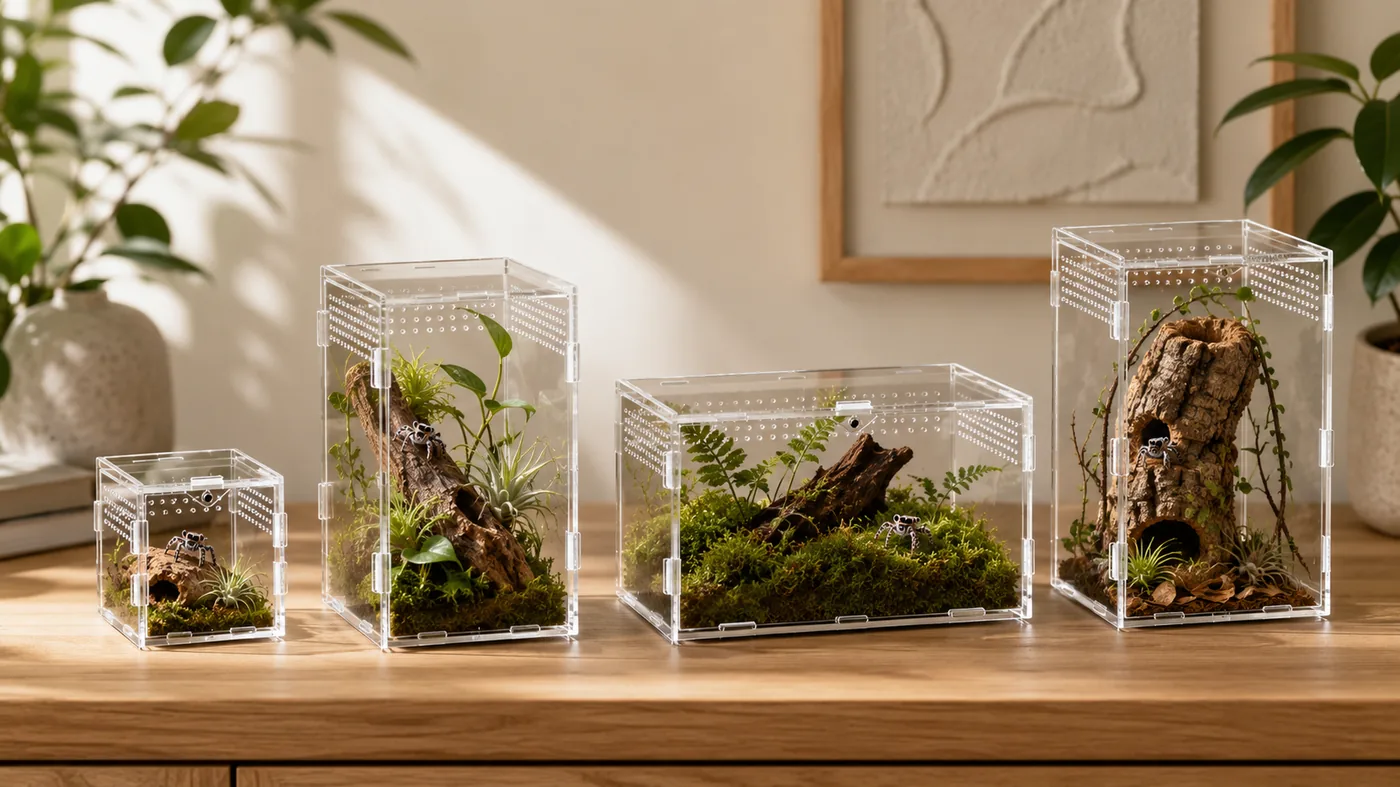
One thing to avoid: sizing up "just in case" beyond what your species needs. An oversized enclosure for a small, visual-hunting spider can make feeding harder (the spider may not notice prey introduced far from its current position) and can make the animal harder to observe, which somewhat defeats the point of a clear acrylic enclosure in the first place. This guidance reflects common practice among hobbyist keepers, not a veterinary or biological standard — if you're keeping a less common species, cross-check sizing with an experienced keeper community first.
Setup itself is straightforward: most keepers add a shallow layer of substrate (coco fiber or sphagnum moss are common choices), one or two anchor points such as cork bark or an artificial plant, and mist lightly every 1-2 days depending on ambient humidity. Assembly of the enclosure itself takes most buyers a few minutes — panels click together without tools, and the protective film should be peeled from all panels before first use for full clarity.
A few practical notes from buyer feedback worth planning around: order ahead of a molt or rehoming date rather than as a same-week purchase, since orders are dispatched within 1-2 business days and typically arrive in 6-10 business days. Peel the protective film from every panel, not just the front, before adding substrate — film left in corners is easy to miss and dulls the clarity that makes acrylic worth choosing over mesh in the first place. And if you're moving a spider that's already established a silk anchor line in its old housing, keeping a small piece of that substrate or décor when you transfer it can shorten the settling-in period in the new enclosure — a common hobbyist practice, not a guaranteed outcome.
Specifications
| Material | Cast acrylic (transparent) |
| Lid closure | Magnetic, flush-fit |
| Ventilation | Laser-cut holes on 2+ panels |
| Assembly | Tool-free panel assembly |
| Small (S) | 10 x 10 x 10 cm — $29.95 |
| Medium (M) | 12 x 12 x 20 cm (tall, arboreal-friendly) — $44.95 |
| Large Tall | 15 x 15 x 25 cm (vertical space) — $59.95 |
| Large Wide | 25 x 15 x 15 cm (floor space) — $59.95 |
| Rating | 4.6 / 5 across 130 verified reviews |
Dimensions and pricing reflect the 3 sizes ArachNest offers, chosen specifically for jumping spiders and similarly sized invertebrates. Species-fit guidance above is based on common hobbyist sizing practice, not manufacturer or veterinary specification.
Rated 4.6 / 5 across 130 verified buyers
Verified buyer reviews. See our full reviews page for more.
"Very good quality. Shipped quickly, was easy to assemble, and is crystal clear once the protective film is removed. Will purchase another one if i get another tarantula."
— Verified buyer, US
"Received quickly, excellent quality... the lid is magnetic and closes perfectly. Very happy with the build."
— С***а, verified buyer, Ukraine
"Very good quality, easy to assemble, and the magnetic closure is very good. It will be great for my jumping spider."
— g***r, verified buyer, Brazil
Photos from verified buyers. See our reviews page for more verified buyer feedback.

Dana Whitfield · Invertebrate Keeper & Enclosure Reviewer, 6 yrs
Dana has kept and rehomed jumping spiders and other small invertebrates for 6 years and reviews enclosure build quality, ventilation, and sizing for ArachNest based on hands-on assembly and hobbyist community practice.
Reviewed and updated July 2026. See how we test.
Jumping spider enclosure questions, answered
What size jumping spider enclosure do I need?
For a single adult jumping spider (most Phidippus or Salticidae species run 10-18mm), the Small 10x10x10cm cube is plenty of floor space. If you keep an arboreal jumper that likes to climb, the Medium 12x12x20cm gives more vertical room for web-line anchoring and molting. The Large 25x15x15cm trades height for floor space — best for keepers who want room for more elaborate décor, multiple feeding stations, or a species that spends more time on the ground.
Is acrylic safe for jumping spiders?
Yes. Cast acrylic is inert, non-toxic, and widely used across the invertebrate-keeping hobby for exactly this reason — it will not off-gas or react with substrate moisture the way some untested plastics can. It also holds humidity better than mesh while staying light enough to move safely.
Do jumping spiders need ventilation holes?
Yes, airflow prevents stagnant, overly humid air that can encourage mold on substrate or decor. ArachNest enclosures ship with laser-cut ventilation patterns on at least two panels — enough exchange for a healthy micro-climate without drying the enclosure out between mistings.
How do I set up a jumping spider terrarium?
Most keepers start with a shallow substrate layer (coco fiber or sphagnum moss), add one or two anchor points for web lines (cork bark, artificial plant, twig), and mist lightly every 1-2 days. This is common hobbyist practice, not a veterinary protocol — always cross-check with an experienced keeper community for your specific species.
Can I use this enclosure for a tarantula or other invertebrate?
This acrylic enclosure format is used broadly across the hobby for reptiles and invertebrates, and our buyer reviews mention everything from tarantulas to small lizards. ArachNest specifically curates the 3 smallest sizes because they suit jumping spiders best — for tarantulas, most keepers will want a larger footprint than what we stock here.
What holds the magnetic lid closed?
A flush-fit magnetic strip holds the lid closed under normal handling while still lifting off in one motion for feeding or misting. Reviewers consistently call out the magnetic closure as a highlight versus screw-top or slide-lid designs that can pinch webbing or require two hands.
Will the acrylic scratch or yellow over time?
Cast acrylic is more scratch-resistant than thin polystyrene but is not glass — avoid abrasive cleaning pads. A soft cloth with water or diluted mild soap keeps panels clear. We have not tracked long-term UV yellowing data ourselves, so keep enclosures out of direct, prolonged sunlight as a precaution.
Is there a smell or off-gassing when it arrives?
Some buyers note a faint protective-film smell on first unboxing that clears within a day once the film is peeled and the enclosure airs out. This is standard for shipped acrylic products and is not reported as persisting.
What is the return policy if the panels arrive damaged?
ArachNest offers a 30-day money-back guarantee. If your enclosure arrives with any fit or shipping-damage issue, contact us within 30 days and we'll send a replacement or a refund.
How long does shipping take?
Orders are dispatched within 1-2 business days and typically arrive in 6-10 business days. Because enclosures are sourced and fulfilled internationally, we recommend ordering ahead of any planned molt or rehoming date rather than as a same-week emergency purchase.
Give your jumping spider a habitat sized for it
Crystal-clear acrylic, a magnetic lid, and 3 sizes built around Salticidae — not repurposed from a tarantula tub. Free shipping, 30-day money-back guarantee.
 Shop the enclosure →